
Snow Camp Local
Sump Pump Installation for Homes That Flood
Protecting crawl spaces and basements across central North Carolina from seasonal groundwater and drainage problems.
Free estimate
Tell us what you need
Three fields. It reaches a person here, not a call centre.
Who Installs Sump Pumps Correctly
A sump pump is only as good as the install. If the pit's wrong, the float switch is set too high, or the discharge line doesn't have a check valve, the pump runs constantly, burns out early, or pushes water back into the pit the moment it shuts off. That's the hard truth nobody mentions in the product listing. Thomas Plumbing & Construction installs sump pumps that are sized to the actual water load your property puts on them, with discharge routed far enough away from your foundation that the same water doesn't come back. Call us before another wet season catches you off guard.
A proper sump pump installation covers more than dropping a pump in a hole. The pit has to be the right diameter and depth for your soil type and water table. The pump itself has to be matched to the gallons-per-hour your property demands, not just whatever's on sale. Discharge line diameter, slope, and termination point all affect whether the system works for years or fails in six months. What drives cost up is access, soil conditions, whether a pit needs to be dug or lined, and how far the discharge needs to run. Every job is different, contact Thomas Plumbing & Construction for an accurate estimate.
What a Correct Sump Pump Install Covers
The details that separate a system that lasts from one that fails mid-storm.
- 01
Pit sizing and placement
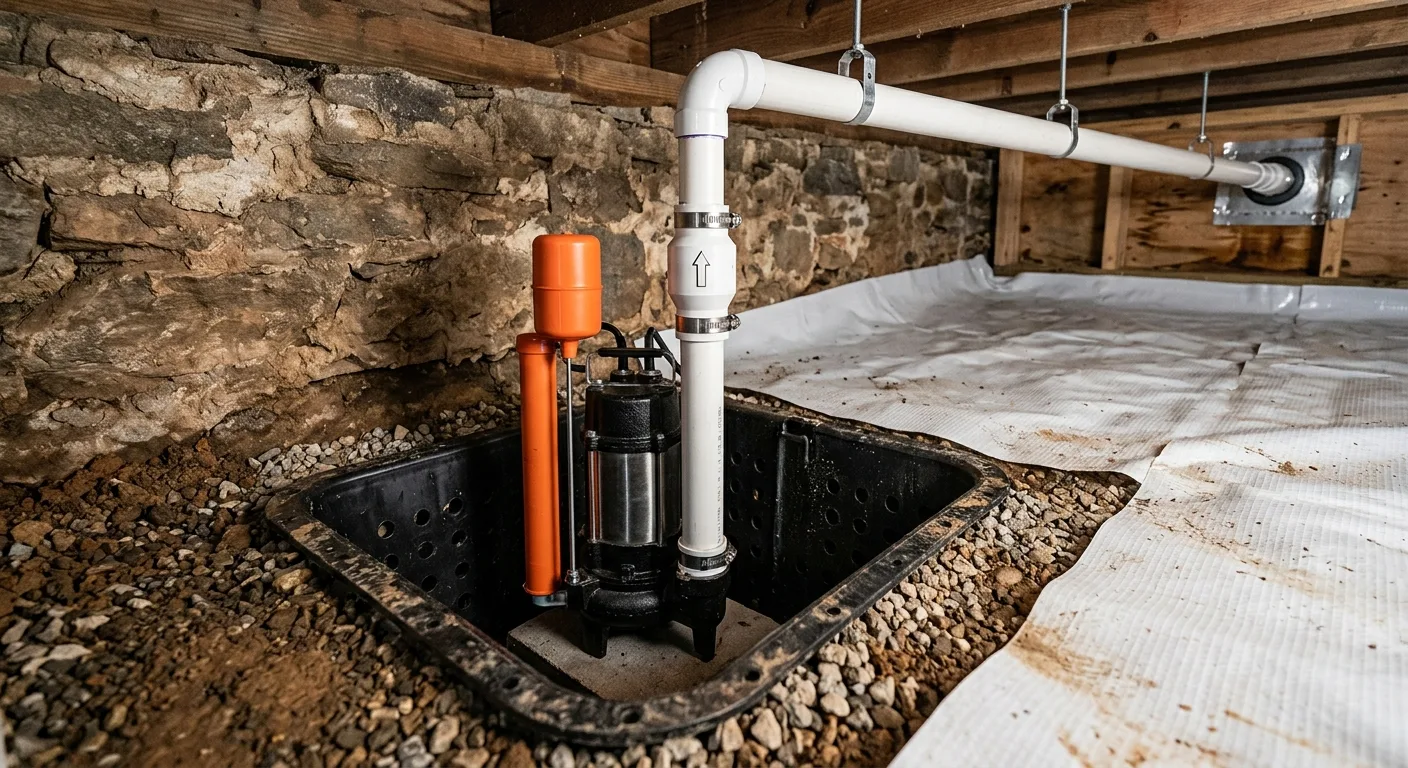
The sump pit has to sit at the lowest point of the crawl space or basement floor. Too small a pit and the pump can't keep up during heavy rain. We dig to the right depth and diameter for your groundwater volume.
- 02
Pump selection by load
A 1/3 HP pump handles a lot of homes fine. A property with a high water table, clay soil, or a large footprint needs more. We match the pump to the actual demand, not the cheapest unit that fits.
- 03
Check valve and discharge line
Without a check valve, the water in the pipe falls back into the pit every time the pump shuts off. We install it correctly every time and route discharge well away from the foundation.
- 04
Float switch calibration
Set it too high and the pump kicks on with six inches of water already in the pit. Too low and it short-cycles and burns out. Getting this right is what keeps the motor running for years.
Common Failures
Sump Pump Mistakes That Cost Homeowners Later
Undersized pump
A pump rated for a small pit running against a high-volume water table will burn out before the storm ends. Matching pump capacity to the site is non-negotiable.
No backup power
Power outages and heavy storms happen at the same time. A pump that needs electricity to run is useless during the worst flooding event of the year. We'll tell you honestly whether a battery backup makes sense for your situation.
Discharge too close to the house
Code and common sense both say to route discharge at least 10 feet from the foundation. Shorter runs just cycle the same water back into the pit.
Wrong pit liner
An unlined pit in sandy or loose soil collapses over time, shifting the pump and blocking the inlet. A proper liner holds shape through freeze-thaw cycles and heavy saturation.
Skipping the check valve
This is the most common DIY mistake we see. Without it, every pump cycle ends with the discharge water dropping back down into the pit. The motor runs twice as often and wears out in half the time.
Our Process
How the Install Process Goes
- 01
Assess the site
We look at where water collects, soil conditions, crawl space or basement access, and how far discharge needs to run. That assessment drives every decision that follows.
- 02
Dig, line, and set the pump
Pit goes in at the right depth, liner goes in, pump gets seated and leveled. Float switch is calibrated to the actual water table of that property, not a generic setting.
- 03
Route discharge and test
Discharge line runs with correct slope, check valve installed, outlet terminated away from the foundation. Then we test it under load before we call the job done.
Regional Context
Why Central NC Properties Need This More Than You'd Think
Quick Facts on Sump Pump Installation
Structured for easy reference when you're comparing options.
- 01
A licensed plumber should handle sump pump installation
Discharge routing, check valve placement, and pump sizing require plumbing knowledge. An incorrect install voids most pump warranties.
- 02
Installation typically requires a permit in NC
Check with your local municipality. Work done without a permit can create issues at resale and with homeowner's insurance claims.
- 03
Battery backup adds meaningful protection
Most basement and crawl space flooding happens during storms that knock out power. A backup system keeps the pump running when grid power fails.
- 04
Average sump pump lifespan is 7 to 10 years
After that, pump efficiency drops and failure risk rises. Replacement before failure is cheaper than emergency water removal after it.
- 05
Discharge line must terminate away from the foundation
Minimum 10 feet is standard. Shorter runs recirculate water back into the pit, increasing run time and wear.
Areas We Install Sump Pumps
Thomas Plumbing & Construction handles sump pump work across central North Carolina, including Alamance, Chatham, and Orange Counties.
- Burlington
- Graham
- Mebane
- Elon
- Gibsonville
- Haw River
- Saxapahaw
- Siler City
- Pittsboro
- Hillsborough
- Liberty
- Swepsonville
- Julian
- Ramseur
- Eli Whitney
Got a Wet Crawl Space? Call Thomas Plumbing.
Don't wait until you've got mold or rot in the floor joists to deal with standing water. Call Thomas Plumbing & Construction and we'll get out there, assess the situation, and tell you exactly what it'll take to fix it.